

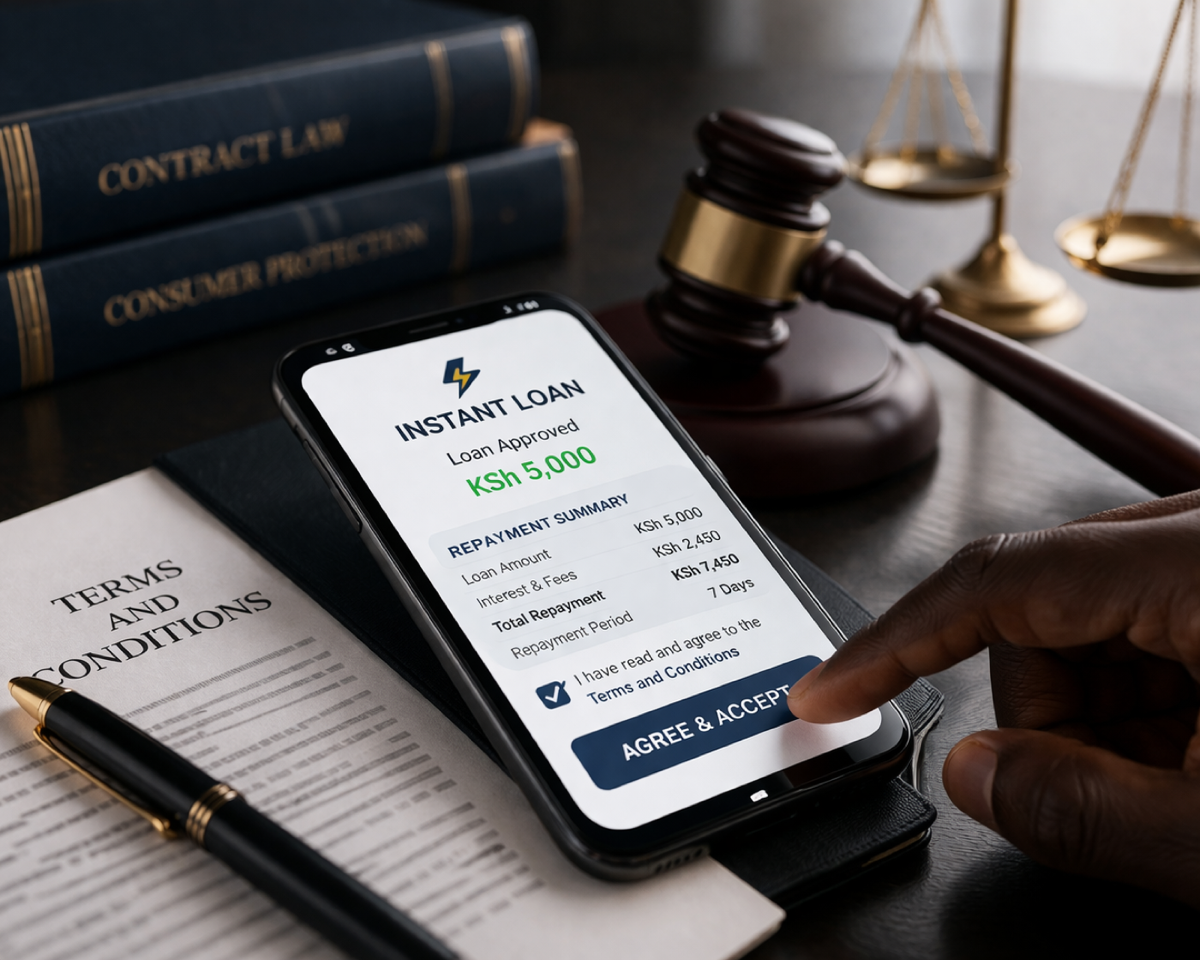
A few taps, a quick approval, and money lands in your account within minutes. Mobile lending has redefined access to credit in Kenya, turning what was once a formal, paper-heavy process into something almost effortless. It is this ease that has made digital loans so attractive and, increasingly, so problematic.
What often appears to be a simple financial solution is, in reality, a structured and binding financial commitment with lasting implications. The convenience of mobile lending can obscure the weight of the obligations that come with it, particularly where the terms are not fully appreciated at the point of acceptance.
At the center of many disputes is the true cost of borrowing. While the initial loan amount may seem manageable, the total repayment figure, once interest, penalties, and additional fees are applied, can escalate rapidly. In some instances, borrowers find themselves repaying far more than anticipated. The difficulty is not always the existence of these charges, but how they are presented. Where terms are embedded in dense digital interfaces or disclosed in a manner that lacks clarity, the imbalance between lender and borrower becomes evident.
The Consumer Protection Act Kenya speaks to fairness and transparency in such transactions. Charges must reflect what was agreed, and terms should not be structured in a way that misleads or places one party at a clear disadvantage. Where repayment demands appear excessive or inconsistent with the original understanding, the issue moves beyond a straightforward obligation and into the territory of dispute.
Default is often the turning point. What begins as a manageable obligation can quickly spiral, particularly where repayment timelines are short and penalties accumulate daily. It is at this stage that pressure tends to intensify persistent calls, urgent messages, and, in some cases, tactics that appear designed to compel rather than recover.
Regulatory oversight has, in recent years, begun to respond to these concerns. The Central Bank of Kenya now requires digital lenders to be licensed, introducing a level of accountability that was previously absent in parts of the sector. This development underscores a broader point: financial innovation does not operate outside structured oversight, and not every platform offering quick loans necessarily meets these standards.
A more deliberate approach to mobile lending can significantly reduce exposure to these risks. The full cost of credit, rather than the immediate amount received, should inform any borrowing decision. The status of the lender, including whether it operates within the current regulatory framework, is equally important.
Where uncertainty arises whether in the terms of a loan or the manner of its enforcement, early legal clarity can make a significant difference in how the matter unfolds.