
A précis of the laws that govern conservancies, ranches and sanctuaries.
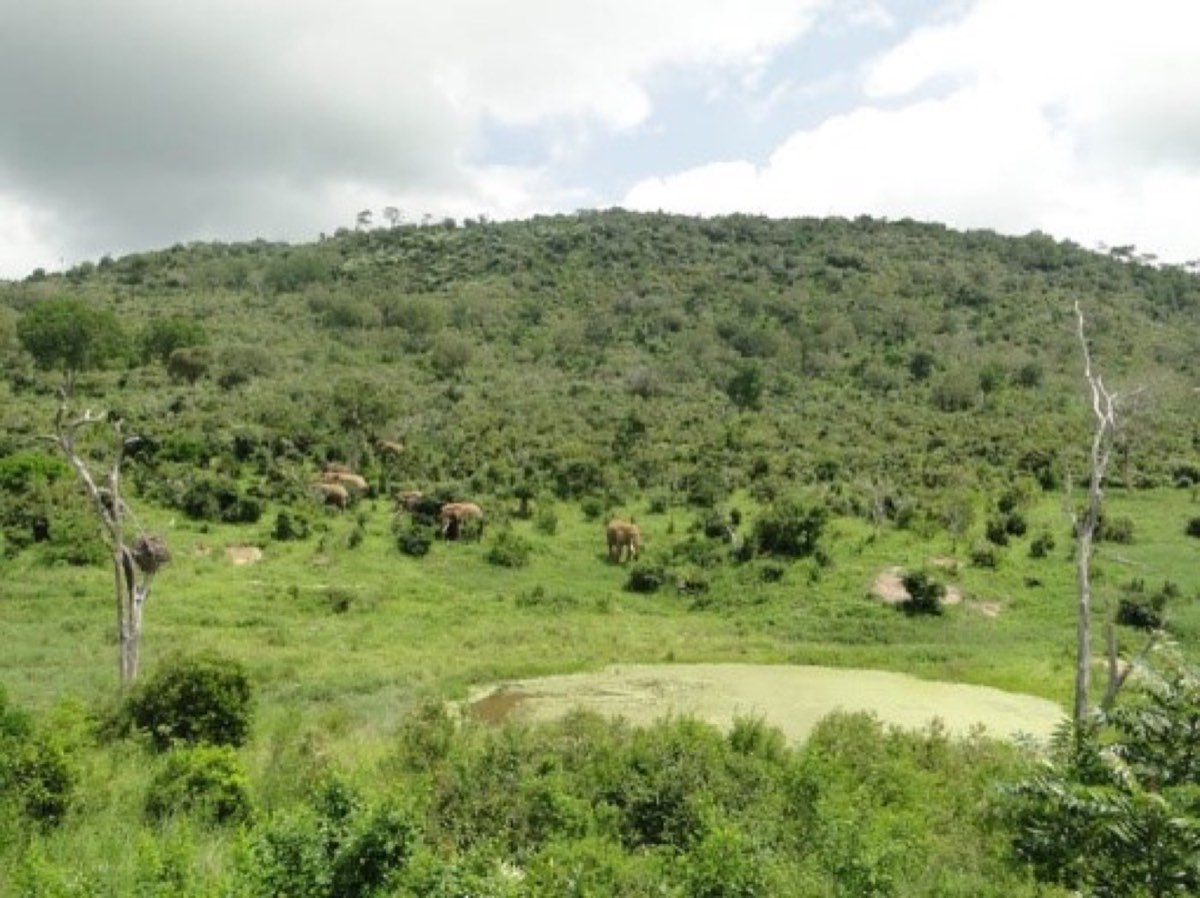
Kenya’s wildlife is a global icon. Two million tourists visit annually, generating KSh 460 billion in tourism revenue with KSh 345 billion (75%) flowing directly from wildlife. But here’s what many don’t know: approximately 65-70% of Kenya’s wildlife does not live in national parks. It lives on community land, private ranches, and ungazetted corridors, governed not by park rangers alone, but by a complex web of national laws, community agreements, and international treaties. Understanding this legal framework is essential for anyone with a stake in Kenya’s wildlife landscapes whether you’re a community living alongside elephants, an investor developing an eco-lodge, a corporation assessing environmental risk, or a policymaker navigating devolution.
At its core, Kenya’s conservation legal framework is a contract. It specifies who benefits from wildlife, who bears its costs, and who gets a say in how it is managed. For three decades, that contract was heavily skewed. Communities suffered the costs while revenues accumulated elsewhere. Since 2013, successive laws have attempted to rebalance it. This document explains how, and why it matters to you.
The Core Legal Architecture
Kenya’s conservation system rests on three legal pillars:
(1) The Constitution of 2010, which establishes a fundamental right to a clean and healthy environment and obligates the state to manage all land sustainably;
(2) The Wildlife Conservation and Management Act (WCMA) of 2013, which governs all wildlife resources nationwide and mandates equitable benefit-sharing; and
(3) The Community Land Act of 2016, which for the first time recognizes community land as a legitimate form of property ownership and unlocked the community conservancy model. These three laws work together to create rights and obligations for communities, investors, corporations, and the state itself.
Supporting legislation – the Environmental Management and Co-ordination Act (EMCA), the Forest Conservation Act, the Water Act, and the Tourism Act – creates additional safeguards and enforcement mechanisms. Taken together, they form a legal ecosystem designed to balance wildlife conservation with human development, community benefit-sharing with state authority, and environmental protection with economic opportunity.
Kenya’s conservation legal framework affects four key groups in fundamentally different ways. Understanding their perspectives is key to understanding why the law matters.
Communities: The Hidden Conservationists
For communities like the Maasai, Samburu, and Digo peoples, wildlife is not a tourist attraction – it’s a neighbour. An elephant destroys your maize crop overnight. A lion kills your livestock. Yet your land contains species the world considers priceless. The law has historically forced these communities to absorb all costs while capturing almost none of the benefits. That is changing. The WCMA now requires government compensation for wildlife damage: KSh 5 million for death, KSh 3 million for permanent disability. Between 2023 and 2025, the government disbursed KSh 3.8 billion – Kenya’s largest-ever single compensation programme. The Community Land Act now allows communities to register their land collectively and enter legally binding conservancy agreements. A Samburu herder can now formally lease portions of community land for conservation and negotiate binding revenue-sharing agreements with tourism operators. His daughter can serve on the community land management committee. These are not symbolic shifts – they are structural changes to property rights and governance.
Real example: Lumo Community Wildlife Sanctuary in Taita Taveta was transformed from a poaching hotspot into a 48,000-acre sanctuary generating tourism revenue for local schools and healthcare. It is community-owned and community-governed. The model has been replicated across Kenya.
2. Investors: Opportunity in a Structured Framework
Kenya’s wildlife estate is one of the world’s most sought-after investment environments. But the law is non-negotiable. Before a single building is constructed, investors must:
(a) conduct rigorous title searches and verify land registration;
(b) obtain valid KWS licensing;
(c) complete an EMCA-compliant Environmental Impact Assessment; and
(d) negotiate binding Community Benefit Agreements with adjacent communities.
These are not optional. Failure results in closure orders and litigation. The frontier for investors is biodiversity finance. Community conservancies like Kasigau REDD+ have generated verified carbon income since 2011. KWS entered the carbon market in 2026. Kenya launched a National Carbon Registry. Investors entering this space with scientific rigour, community benefit-sharing, and regulatory compliance will capture significant advantage – but only if they understand the legal landscape. The law protects good actors; it punishes those who cut corners.
3. Corporations: Conservation Becomes Mandatory
Corporations operating in Kenya face three key legal pressures:
First, mandatory Environmental Impact Assessment for any major project near protected areas. Courts have halted multibillion-shilling infrastructure projects on environmental grounds – this is documented precedent, not theoretical risk.
Second, Environmental, Social, and Governance (ESG) standards from international buyers scrutinizing land rights, deforestation footprints, and community relationships.
Third, potential civil liability if wildlife injuries occur on land the corporation owns or manages and can be shown to have inadequate preventive measures. The most forward-thinking corporations are not treating wildlife law as compliance burden – they’re treating it as opportunity. Corporate Social Investment conservancy partnerships fund ranger programmes and generate measurable ESG credibility that supports supply chain sustainability narratives.
4. The State: Authority Meets Obligation
The Kenyan government is simultaneously conservation authority, beneficiary, and social agent. It collects tourism revenue, administers protected areas, and is obligated by law to redistribute benefits equitably to affected communities. This creates inherent tensions. The government approved the Nairobi National Park–Kapiti Wildlife Corridor in 2025 to rebuild an ecosystem that collapsed from urban fragmentation. It opened the world’s largest rhino sanctuary in Tsavo West in December 2025, now protecting 78% of the global Eastern black rhino population. Yet KWS faces an annual operating deficit exceeding KSh 11 billion, with 72% of its budget consumed by personnel costs. Structural constraints that legislation alone cannot resolve.
The Legal Architecture: The Four Cornerstone Laws
Law 1: The Wildlife Conservation and Management Act (WCMA) of 2013
The WCMA is Kenya’s principal wildlife law. It applies everywhere – government land, community land, private ranches. It establishes the Kenya Wildlife Service (KWS) as the primary enforcement authority, requires a National Wildlife Conservation Strategy every five years, and creates a formal compensation system for human-wildlife conflict. Most importantly, it mandates that wildlife benefits be ‘equitably shared’ with Kenyans. This single principle legitimizes the entire community conservancy movement. Any law, policy, or agreement that violates these WCMA principles can be challenged in court. The Act was amended in October 2025, and a more comprehensive Wildlife Bill is currently under parliamentary review, proposing new regulatory bodies and a dedicated Wildlife Tribunal.
Law 2: The Community Land Act of 2016
Before 2016, millions of Kenyans – particularly pastoral communities – occupied land for generations but did not legally own it. It was classified as ‘government trust land,’ vulnerable to expropriation. The Community Land Act changed this fundamentally. Communities can now register land collectively, obtain title certificates, establish governance structures, and enter legally binding conservancy agreements. Women and youth must have representation in management committees. This unlocked the community conservancy model but also created new risks: subdivision of communal land into private parcels can fragment wildlife corridors unless communities choose collective registration. The Act is a tool of extraordinary potential whose conservation benefits depend entirely on how communities use it.
Law 3: The Environmental Management and Co-ordination Act (EMCA) of 1999
The EMCA requires Environmental Impact Assessment for any significant development near protected areas. A lodge, road, dam, or airstrip cannot be built without full EIA. This is where communities, scientists, and civil society formally raise objections. Used effectively, it is a powerful accountability tool. Courts have halted major infrastructure on environmental grounds. For investors and corporations, EMCA compliance is non-negotiable – it is the gate through which every major project must pass.
Law 4: The Constitution of Kenya (2010)
The foundation of Kenya’s entire legal system. Article 42 establishes the right to a clean and healthy environment as a fundamental right. Article 60 requires all land be managed sustainably. Article 69 obligates the state to maintain 10% tree cover and eliminate environment-endangering activities. Conservation is not a favour the government grants – it is a constitutional obligation. Any law, policy, or agreement violating these principles can be challenged in court. This is why environmental lawyers reference the Constitution first and the WCMA second.
Other laws that are of importance include the Tourism Act (2011) that licenses eco-tourism businesses; the Forest Conservation Act (2016) which protects forest ecosystems in highland conservation areas; The Water Act (2016) governs access to water in semi-arid conservancies where people and wildlife compete for seasonal sources. The Protection of Endangered and Threatened Species Regulations (2017) require KWS permits for any handling of listed species. Together, these create a comprehensive legal ecosystem.
2016–2026: A Decade of Legislative Ferment and Operational Achievement
The decade from 2016 to 2026 has been the most legislatively active period in Kenya’s wildlife governance history. Three major developments stand out.
1. The WCMA Amendment (2025) and the Proposed Wildlife Bill (2025–2026)
In October 2025, the WCMA Amendment Act No. 24 was gazetted, addressing procedural gaps in the original 2013 Act. More significantly, the State Department for Wildlife drafted a comprehensive Wildlife Conservation and Management Bill to replace the 2013 WCMA entirely. The Bill proposes separating regulatory functions from KWS’s conservation operations through a new Kenya Wildlife Regulatory Authority, establishing a dedicated Research and Training Institute, and creating a National Wildlife Tribunal to adjudicate disputes more efficiently than general courts. The Bill has attracted constructive criticism: the African Wildlife Foundation raised concerns that a shift toward ‘bioeconomy’ framing could normalize extractive activities like mining in conservation areas; that new regulatory bodies might create bureaucratic friction; and that benefit-sharing provisions, while improved, still need stronger specificity to translate into meaningful community income.
2. Operational Expansion: The KWS Digital Transformation
KWS revenue nearly doubled from KSh 4 billion (2022) to KSh 8 billion (2024/25) following digitisation of park fee collection. The government recruited 1,500 new rangers since 2023, purchased 100 new vehicles, and deployed AI-enabled surveillance, drones, and encrypted digital radio networks across high-value conservation areas. Yet KWS faces an annual operating deficit exceeding KSh 11 billion. Personnel costs consume 72% of its budget. No amount of legislative reform resolves this structural constraint without sustained exchequer support – which remains uncertain.
3. The Tsavo West Rhino Sanctuary: Full-Scale Landscape Implementation
On 9 December 2025, President Ruto opened the expanded Tsavo West Rhino Sanctuary: 3,200 square kilometres, now the world’s largest rhino sanctuary, protecting a founder population of 200 Eastern black rhinos (78% of the global subspecies). It is secured by AI cameras, drones, LoRaWAN tracking, and 300+ security personnel. Five luxury hotels are planned within the sanctuary at USD 500-1,000 per night, generating premium conservation revenue. By 2030, the sanctuary is projected to generate USD 45 million in combined tourism and conservancy revenue. This is what a decade of integrated legal, institutional, and financial investment looks like at landscape scale. It is also what the law enables when all parties – state, communities, investors – commit to structured partnership.
Kenya’s International Role
Kenya is a signatory to CITES (Convention on International Trade in Endangered Species) since 1978 and the Convention on Biological Diversity. The Kunming-Montreal Global Biodiversity Framework (2022) sets a ’30×30′ target: protect 30% of the world’s land by 2030. Kenya already leads in formal protection. KWS entered the carbon credit market formally in 2026, recruiting specialists to develop carbon projects across its national park network. Kenya launched a National Carbon Registry to streamline oversight. Community conservancies like Kasigau REDD+ have generated carbon income since the early 2010s. The government has set a target of attracting five million tourists annually by 2027 (up from 3.38 million in 2024/25). These international commitments and targets shape domestic legal implementation in real time.
The Law as a Living Contract
Kenya’s conservation legal framework is a living contract between the state, its citizens, its business community, and the natural world. Like any contract, it works when all parties understand their rights and obligations. It fails when one party takes more than their share or when enforcement mechanisms are too weak.
Key Takeaway 1: The Contract Was Historically Skewed – and Still Is
Communities bore enormous costs: lost crops, killed livestock, restricted land use, foregone development. Revenues accumulated elsewhere. The 2013 WCMA, 2016 Community Land Act, and proposed 2025 Wildlife Bill all attempt to rebalance this contract by giving communities stronger rights, clearer legal standing, and direct claims to benefit-sharing. Whether these instruments translate into real change depends on implementation, funding, and political will – none of which is guaranteed.
Key Takeaway 2: For Investors, Opportunity Exists Within Structure
Kenya’s wildlife estate generates billions annually in tourism revenue. Carbon credits, biodiversity offsets, and conservation finance add new layers of value. But the framework demands genuine partnership with communities – not tokenistic consultation, but binding benefit agreements, employment commitments, and accountability. Investors who treat community agreements as legal boxes to tick will find the social contract fractures. Those who invest genuinely in partnership will capture advantage.
Key Takeaway 3: Corporations Face Inevitable Integration of Natural Capital
The natural world is on the balance sheet – literally. Through EIA requirements, ESG demands, and community land rights, ecological damage becomes quantifiable, litigable, and material to valuations. Corporations building environmental stewardship into core operations – not as CSR garnish – are positioning themselves ahead of a regulatory trajectory that points in only one direction.
Key Takeaway 4: Implementation Gaps Remain Systemic
Kenya’s legal framework is among the world’s most progressive. But it operates within real constraints: KWS faces structural budget deficits; compensation claims still face delays despite recent improvements; county-level institutions vary wildly in competence. Legal design is important. Implementation is harder. Success requires sustained funding, institutional development, and political commitment.
Further Reading & Official Resources
WCMA 2013 (Full Text): https://new.kenyalaw.org/akn/ke/act/2013/47/eng@2022-12-31
Wildlife Bill 2025 (Full Text): https://www.tourism.go.ke/wp-content/uploads/2025/04/Wildlife-Bill-2025-1.pdf
Community Land Act 2016: https://new.kenyalaw.org/akn/ke/act/2016/27/eng@2022-12-31
KWS Licensing & Compensation: https://www.kws.go.ke
Kenya Wildlife Conservancies Association (KWCA): https://kwcakenya.com/conservancies/conservancies-policies/
Community Guide to the Wildlife Act: https://wildlifedirect.org/wp-content/uploads/2017/02/A-Guide-to-the-Wildlife-Act-of-Kenya-2013.pdf
Human-Wildlife Conflict Strategy 2024–2033: https://www.kenyanews.go.ke/govt-to-implement-compensation-scheme-technology-to-tackle-wildlife-attack-around-wildlife-corridors/
EMCA 1999: https://new.kenyalaw.org/akn/ke/act/1999/8/eng@2022-12-31