There is a quiet luxury in the air-conditioned stillness of corporate boardrooms. Leather chairs hug you just right, soft carpets muffle the urgency of the outside world, and hours are measured in neat increments of polished legal opinions. It is clean, it is predictable, and it speaks a language of statutes and subsections meant for people who already hold the keys.
And then, there is Njanje area in Lunga Lunga, Kwale County.
Here, the air is thick, the dust settles gently on everything, and the law, that grand, untouchable thing residing in dusty leather-bound volumes feels as distant as the surface of Mars.
This is where our team from MMS Advocates found ourselves on a Tuesday late in August. We didn’t come to sip coffee and debate subsections. We came to trade the boardroom for the red earth and do something radical: take the law straight to the people.
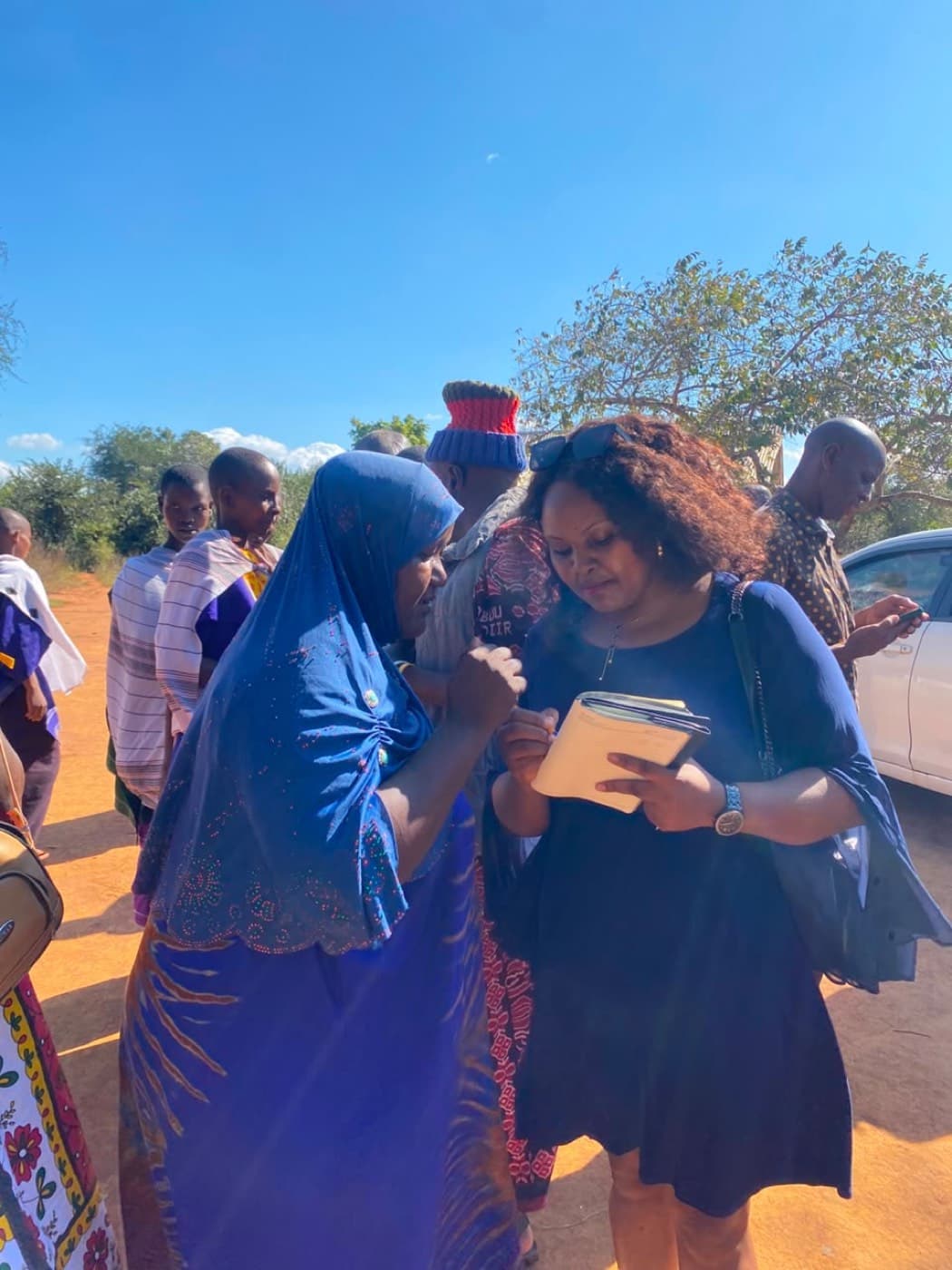
Let’s be honest. Lawyers do not traditionally do road trips to remote villages just to chat. We send demand letters. We file motions. But something fundamental is shifting, and we at MMS Advocates decided it was time to get our shoes dusty. Every journey into the grassroots starts with protocol, because you do not just roll into a village like you own the place. Our very first stop was a courtesy call to the area Chief, marking the formal launch of our presence and strategy in Lunga Lunga. It was an essential introductory meeting aimed at securing his support and buy-in for all our subsequent community activities. Once we had that stamp of administrative blessing, the entire team was introduced to the Chief and the community members present, outlining each member’s role and our overall objective in the area.
It didn’t take long to realize why we made the trip. Under the shade of a tree, over casual, unhurried community banter, reality bared its teeth. We sat down and actually listened to people instead of waiting for our turn to speak, and a few stark truths tumbled out through local voices like Mzee Juma’s. Civic illiteracy is a quiet pandemic here; people are expected to play their part in governance and development, but nobody handed them the manual. Basic legal rights and recourse feel like a distant rumor, and if things go sideways, residents have no idea how to access legal recourse. And then there is the invisible half. Women in community decision-making are practically ghosts, sitting on the periphery with no meaningful voice or platform in societal and community affairs.
Bridging that gap means realizing that workshops and town halls cannot just be one-off events; they have to evolve into consistent, structured civic education and legal-rights awareness programmes tailored specifically to the realities of places like Lunga Lunga. When you sit down with elders and community leaders, you quickly learn that rights cannot remain theoretical abstracts locked away in statutes. They have to be translated into practical tools that everyday citizens can wield to protect their land, their families, and their livelihoods. Designing deliberate strategies to carve out space for women’s voices in these public forums isn’t just an auxiliary checklist item it is the core precondition for any meaningful societal transformation at the grassroots level.
Beyond the immediate community interactions, this transition requires a fundamental shift in how legal practice interfaces with public policy. Too often, policy is debated in urban vacuums by individuals who have never set foot on a red-earth path in Kwale County, leaving rural populations entirely unrepresented in the legislative frameworks that govern them. By anchoring our presence through maintained contacts, follow-up visits, and continuous dialogue with local administration, we are building a bridge between isolated rural realities and high-level legal advocacy. It is about taking the pulse of the village and carrying those raw, unfiltered lived experiences straight into broader policy discussions where real systemic reform is shaped.
It is easy for a law firm to write a fancy report, file it in a mahogany cabinet, and call it CSR. But what we did in Lunga Lunga points to a different kind of awakening. It is the realization that corporate success is hollow if the society surrounding it remains legally blind. Our strategy launch wasn’t just a PR exercise; it was an admission that the law needs a translator. It needs to strip off its stiff collar, roll up its sleeves, and teach a mother how to claim her rights, show a youth how governance actually works, and drag village dialogues into the 21st century by making room for women at the table.
Directly engaging with community members and exchanging contacts at the end of the day wasn’t just about networking. It was establishing a lifeline to facilitate ongoing communication and follow-up. Because true justice doesn’t lie exclusively in high court corridors. Sometimes, true justice looks like a lawyer sitting on a plastic chair in Lunga Lunga, swapping contacts with an elder, and promising that next time, we aren’t just coming to talk we’re coming to work. Ultimately, there is an undeniable sense of fulfillment in watching MMS transition and set root from corporate to the grassroots and public policy.