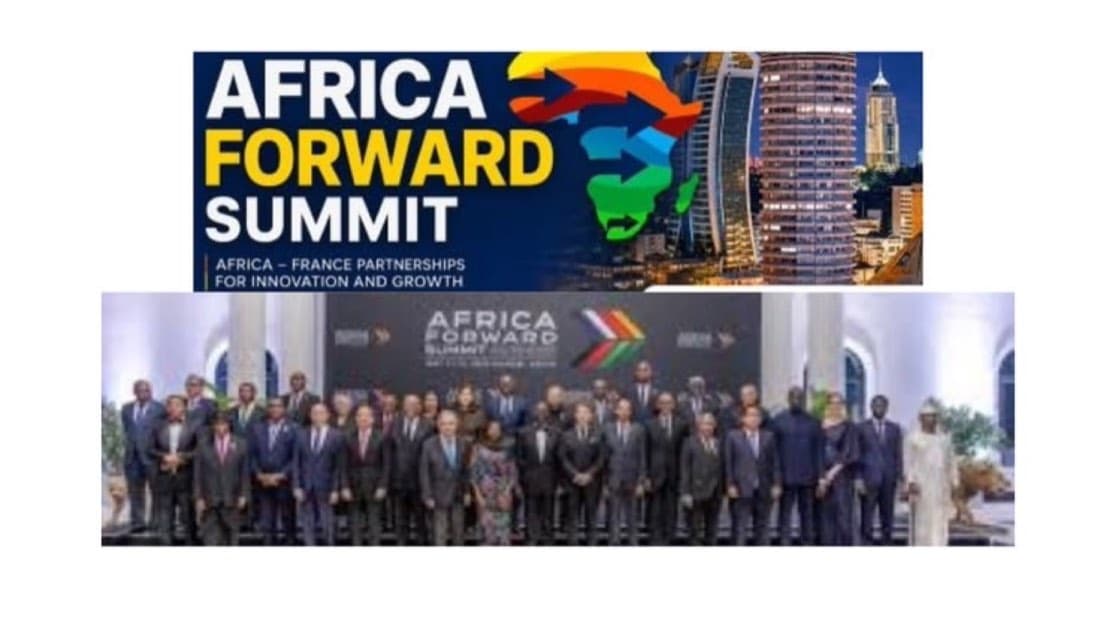


Last week, Nairobi hosted the inaugural Africa Forward Summit, officially themed “Africa–France Partnerships for Innovation and Growth.” Co-chaired by President William Ruto and French President Emmanuel Macron, the summit brought together more than thirty African Heads of State, global investors, multilateral institutions, and over 2,000 private-sector delegates at the Kenyatta International Convention Centre (KICC). It was the first time France hosted a major Africa-France summit in a non-Francophone African country — a move that was both symbolic and strategic.
The summit focused on seven key areas: green industrialisation, artificial intelligence and digital infrastructure, agriculture, health, blue economy, peace and security, and reform of global financial systems. While diplomatic language dominated the official speeches, the real undertone of the summit was economic positioning. France is recalibrating its African engagement after losing influence in parts of the Sahel region, while Kenya is increasingly presenting itself as East Africa’s diplomatic and commercial gateway.
Historically, France-Africa relations have been associated with Françafrique, the political and economic influence France retained over former colonies after independence. The decision to hold the summit in Kenya, a country with no colonial ties to France, was therefore significant. It reflected France’s attempt to broaden its African partnerships beyond traditional Francophone alliances and engage countries viewed as commercially stable, regionally influential, and innovation-driven.
For Kenya, the summit was equally strategic. Nairobi positioned itself not as a recipient of aid, but as a partner for investment, technology, and regional expansion. President Ruto repeatedly framed Africa’s future around “investment rather than dependency,” reflecting a broader continental shift away from aid-centred diplomacy.
The summit produced several major bilateral agreements between Kenya and France. Among the headline projects was the KSh 12.5 billion Nairobi Commuter Rail modernisation programme aimed at easing urban transport and improving connectivity within Nairobi Metropolitan. French shipping giant CMA CGM also announced a €700 million investment towards the modernisation of facilities at the Port of Mombasa, while Schneider Electric committed approximately €120 million towards a micro-grid energy plant near Mombasa. Agreements were also signed on digital infrastructure, education, renewable energy, and healthcare cooperation.
Beyond the figures, the emphasis on innovation was particularly notable. Artificial intelligence, digital connectivity, fintech, and climate technology featured prominently throughout the summit discussions. Kenya’s growing reputation as a regional technology hub clearly influenced France’s approach. For years, Nairobi has marketed itself as “Silicon Savannah,” and the summit reinforced that branding by placing Kenya at the centre of conversations on Africa’s digital future.
Legally and commercially, however, these developments raise important questions. Large-scale foreign investments inevitably require strong regulatory frameworks, transparent procurement systems, enforceable public-private partnership structures, and robust local content protections. Kenya’s legal and policy environment will increasingly be tested on issues such as data protection, AI governance, technology transfer, environmental compliance, and dispute resolution mechanisms. As foreign investment deepens, the quality of implementation will matter far more than the announcements themselves.
The summit also revived debate around the Kenya-France Defence Cooperation Agreement ratified earlier this year. The agreement covers maritime security, intelligence sharing, peacekeeping cooperation, and military training. While the government maintains that Kenyan sovereignty remains protected, critics have questioned certain jurisdictional provisions relating to foreign troops operating within Kenya. Those concerns mirror wider public conversations around accountability, transparency, and the extent to which international agreements adequately protect national interests.
Public sentiment surrounding the summit has therefore been mixed. Supporters viewed the summit as evidence that Kenya is increasingly becoming a continental diplomatic and investment powerhouse capable of attracting high-level global capital. The infrastructure, energy, and technology commitments were welcomed by many within business and policy circles, particularly given Kenya’s ongoing push for industrialisation and job creation.
At the same time, civil society groups and policy commentators questioned whether the renewed French engagement represents a genuine partnership or simply a geopolitical repositioning following France’s declining influence in West Africa. Others raised familiar concerns around debt exposure, unequal bargaining power, and whether ordinary Kenyans will meaningfully benefit from the announced investments.
Those concerns are not unfounded. Kenya’s experience with previous mega infrastructure projects has made the public more cautious about large foreign-backed initiatives. Still, the broader significance of the summit cannot be ignored. Kenya is increasingly positioning itself as both a diplomatic convenor and a commercial gateway into East Africa. Hosting a summit of this scale reinforced Nairobi’s growing geopolitical importance and demonstrated confidence in Kenya’s institutional and economic standing.
Whether the summit becomes a transformative moment for Kenya will depend on what follows thereafter: the contracts negotiated, the regulations enforced, the transparency of implementation, and the extent to which the investments translate into jobs, infrastructure, technology transfer, and long-term economic value.